2016年12月21日水曜日

My Featured Film

Alice in Wonderland (1915)


I. About the Film
Alice in Wonderland is a 1915 silent film adaptation of Lewis Carroll's classic novel, Alice's Adventures in Wonderland, directed and written by W. W. Young and starring Viola Savoy as Alice.
This film version is notable for depicting much of the 'Father William' poem and it includes footage resembling Tenniel's illustration of Father William doing his back-somersault at the front door.


Works Cited (参考文献)

"Alice in Wonderland (1915 Film)." Wikipedia. Wikimedia Foundation, n.d. Web. 11 Jan. 2017. <https://en.wikipedia.org/wiki/Alice_in_Wonderland_(1915_film)>.


II. Versions of the Film

Alice in Wonderland (1903)
Alice Through the Looking Glass (2016)


III. About the Writer & Director - W. W. Young
(Writer / Directorの中から、一つを選ぶこと)

Almost nothing is known about the writer and director of this film, W. W. Young. Available information shows that he is credited for this version of Alice in Wonderland and as editor of the 1930 movie, The Mystery of Life.


Works Cited (参考文献)


"W.W. Young." IMDb. IMDb.com, n.d. Web. 11 Jan. 2017. <http://www.imdb.com/name/nm0950148/>.


IV. My Reaction


A. Reaction Point - Characters


B. Reaction Point - Costumes


C. Reaction Point - Mood


D. My General Opinion
I was surprised because I didn't know that there are so many versions of the films of Alice in Wonderland.
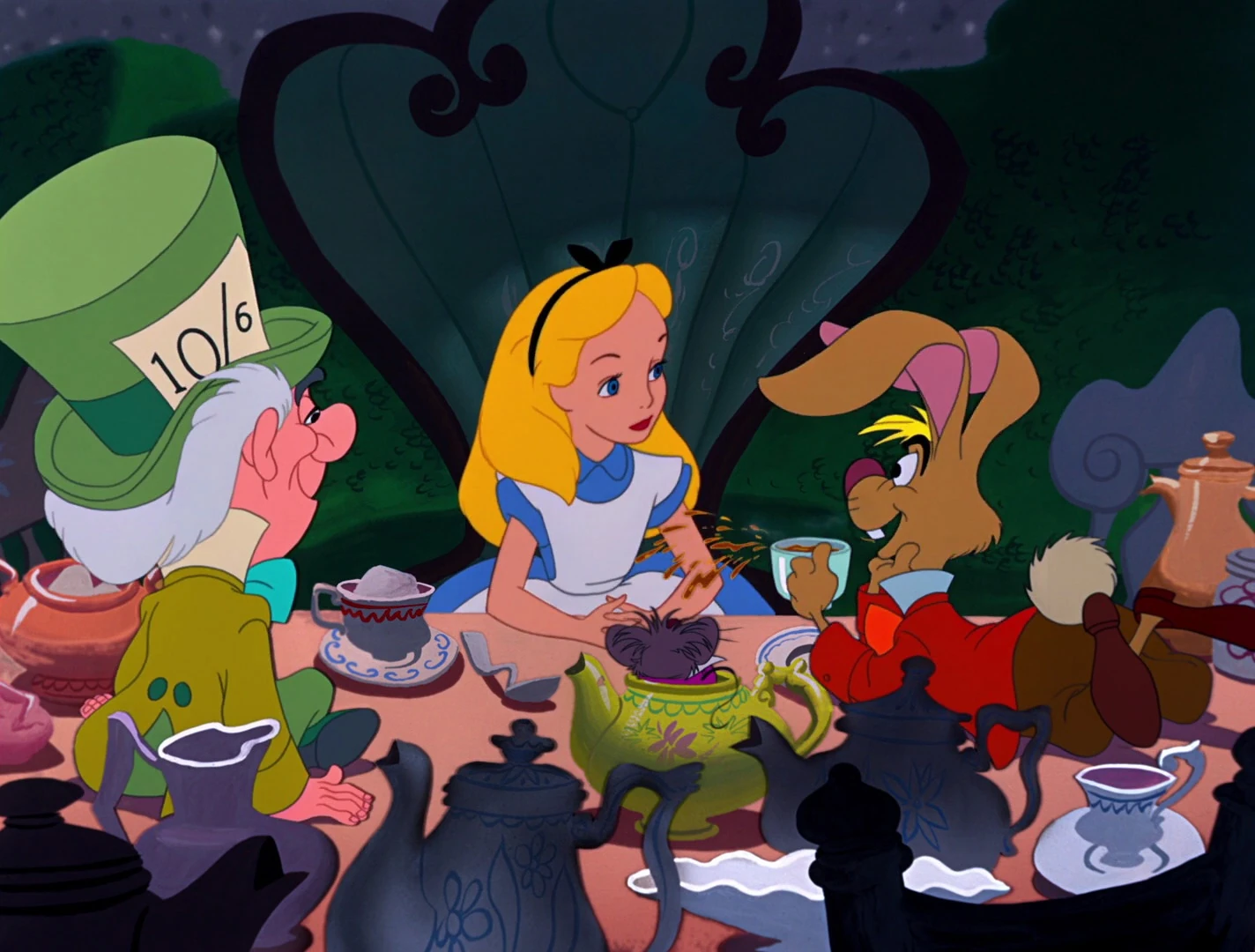
I like Disney's animation version and Tim Burton's version, but I think 1915 version also wonderful.

2016年12月16日金曜日

My Featured Novel


I. About the Novel: A Christmas Carol


A Christmas Carol in Prose, Being a Ghost-Story of Christmas, commonly known as A Christmas Carol, is a novella by Charles Dickens, first published in London by Chapman & Hall on 19 December 1843. The novella met with instant success and critical acclaim. A Christmas Carol tells the story of a bitter old miser named Ebenezer Scrooge and his transformation into a gentler, kindlier man after visitations by the ghost of his former business partner Jacob Marley and the Ghosts of Christmas Past, Present and Yet to Come.
The book was written at a time when the British were examining and exploring Christmas traditions from the past as well as new customs such as Christmas cards and Christmas trees. Carol singing took a new lease of life during this time. Dickens' sources for the tale appear to be many and varied, but are, principally, the humiliating experiences of his childhood, his sympathy for the poor, and various Christmas stories and fairy tales.
A Christmas Carol remains popular—having never been out of print—and has been adapted many times to film, stage, opera, and other media.

Works Cited (参考文献)


II. Versions of the Novel in the Mass Media

A Christmas Carol (1984) by 20th Century Fox


Mickey's Christmas Carol (1983) by The Walt Disney Company


A Chrirstmas Carol (2009) by Walt Disney Studios


III. About the Author: Charles Dickens


Charles John Huffam Dickens (7 February 1812 – 9 June 1870) was an English writer and social critic. He created some of the world's best-known fictional characters and is regarded as the greatest novelist of the Victorian era. His works enjoyed unprecedented popularity during his lifetime, and by the twentieth century critics and scholars had recognised him as a literary genius. His novels and short stories enjoy lasting popularity.
Born in Portsmouth, Dickens left school to work in a factory when his father was incarcerated in a debtors' prison. Despite his lack of formal education, he edited a weekly journal for 20 years, wrote 15 novels, five novellas, hundreds of short stories and non-fiction articles, lectured and performed extensively, was an indefatigable letter writer, and campaigned vigorously for children's rights, education, and other social reforms.
Dickens's literary success began with the 1836 serial publication of The Pickwick Papers. Within a few years he had become an international literary celebrity, famous for his humour, satire, and keen observation of character and society. His novels, most published in monthly or weekly instalments, pioneered the serial publication of narrative fiction, which became the dominant Victorian mode for novel publication. The instalment format allowed Dickens to evaluate his audience's reaction, and he often modified his plot and character development based on such feedback. For example, when his wife's chiropodist expressed distress at the way Miss Mowcher in David Copperfield seemed to reflect her disabilities, Dickens improved the character with positive features. His plots were carefully constructed, and he often wove elements from topical events into his narratives. Masses of the illiterate poor chipped in ha'pennies to have each new monthly episode read to them, opening up and inspiring a new class of readers.
Dickens was regarded as the literary colossus of his age. His 1843 novella, A Christmas Carol, remains popular and continues to inspire adaptations in every artistic genre. Oliver Twist and Great Expectations are also frequently adapted, and, like many of his novels, evoke images of early Victorian London. His 1859 novel, A Tale of Two Cities, set in London and Paris, is his best-known work of historical fiction. Dickens's creative genius has been praised by fellow writers—from Leo Tolstoy to George Orwell and G. K. Chesterton—for itsrealism, comedy, prose style, unique characterisations, and social criticism. On the other hand, Oscar WildeHenry James, and Virginia Woolf complained of a lack of psychological depth, loose writing, and a vein of saccharine sentimentalism. The term Dickensian is used to describe something that is reminiscent of Dickens and his writings, such as poor social conditions or comically repulsive characters.

Works Cited (参考文献)

https://en.wikipedia.org/wiki/Charles_Dickens


IV. My Reaction

A. Reaction Point - plot

B. Reaction Point - character
  • This story's protgonist is Evenezer Scrooge. And three ghosts apper.
  • Scrooge is merchants past middle age. He is coldhearted, an egoist, a miser. He spends the days totally unrelated to warmth or the love of the human heart. And three ghosts are the Ghost of Christmas Past, the Ghost of Christmas Present, and the Ghost of Christmas Yet to Come.

C. Reaction Point - denouement
  • Overwhelmed with joy by the chance to redeem himself and grateful that he has been returned to Christmas Day, Scrooge rushes out onto the street hoping to share his newfound Christmas spirit. He sends a giant Christmas turkey to the Cratchit house and attends Fred's party, to the stifled surprise of the other guests. As the years go by, he holds true to his promise and honors Christmas with all his heart: he treats Tiny Tim as if he were his own child, provides lavish gifts for the poor, and treats his fellow human beings with kindness, generosity, and warmth.
  • Scrooge was panitent.


D. My General Opinion

I knew this story all the time since I was child. I had a video of disney animation version, and I was watching it over and over again.
This story taught us something important. So this is loved by people of the world.
 

2016年11月16日水曜日

My Featured Song


Ours by Taylor Swift


Elevator buttons and morning air
Strangers' silence makes me wanna take the stairs
If you were here we'd laugh about their vacant stares
But right now, my time is theirs

Seems like there's always someone who disapproves
They'll judge it like they know about me and you
And the verdict comes from those with nothing else to do
The jury's out, but my choice is you

So don't you worry your pretty little mind
People throw rocks at things that shine
And life makes love look hard
The stakes are high
The waters rough
But this love is ours

You never know what people have up their sleeves
Ghosts from your past gonna jump out at me
Lurking in the shadows with their lip gloss smiles
But I don't care, cause right now you're mine

And you'll say don't you worry your pretty little mind
People throw rocks at things that shine
And life makes love look hard
The stakes are high
The waters rough
But this love is ours

And it's not theirs to speculate
If it's wrong and your hands are tough but they are where mine belong and
I'll fight their doubt and give you faith with this song for you

Cause I love the gap between your teeth
And I love the riddles that you speak
And any snide remarks from my father about your tattoos will be ignored
Cause my heart is yours

So don't you worry your pretty little mind
People throw rocks at things that shine
And life makes love look hard

So don't you worry your pretty little mind
People throw rocks at things that shine
But they can't take what's ours
They can't take what's ours
The stakes are high
The waters rough
But this love is ours


I. About the Song

"Ours" is a song by American singer-songwriter Taylor Swift. The song was solely written by Swift and was aided by Nathan Chapman in producing the song as a bonus track from her third studio albumSpeak Now (2010). It is the sixth single off of the album and is the fifth single from Speak Now to be sent to country radio.
The song has been met positive reviews from critics praising Swift's vocal and the songwriting. Critics have also praised Swift for her way to set the mood with the song.
"Ours" is a song of three minutes and fifty-seven seconds. The song is written soley by Swift, who also produced the song along with Nathan Chapman.The song has been described as a "love letter".Amy Sciarretto of Pop Crushdescribes the song as "a pretty, slower tempo song that showcases Swift’s strengths, which are her inviting, open journal lyrics and that sweet voice." Karen Goodner of All Access describes the song as being "in love and knowing that they can make it through the rough times."

Works Cited (参考文献)

http://taylorswift.wikia.com/wiki/Ours_(song)


II. About the Songwriter


Taylor Alison Swift was born on December 13, 1989, in Reading, Pennsylvania, and grew up in the suburban Philadelphia area. Swift spent the early years of her life on a Christmas tree farm in Cumru Township, Pennsylvania.
At the age of nine, Swift became interested in musical theater and performed in four Berks Youth Theatre Academy productions. She also traveled regularly to New York City for vocal and acting lessons. Swift later shifted her focus toward country music inspired by Shania Twain's songs, which made her "want to just run around the block four times and daydream about everything". She spent her weekends performing at local festivals and events. After watching a documentary about Faith Hill, Swift felt sure that she needed to go to Nashville, Tennessee, to pursue a music career. At the age of eleven, she traveled with her mother to visit Nashville record labels and submitted a demo tape of Dolly Parton and Dixie Chicks karaoke covers.
When Swift was about 12 years old, a computer repairman taught her how to play three chords on a guitar, leading to her first effort as a songwriter, "Lucky You".
At an industry showcase at Nashville's Bluebird Cafe in 2005, Swift caught the attention of Scott Borchetta, a DreamWorks Records executive who was preparing to form his own independent record label, Big Machine Records.


Works Cited (参考文献)

https://en.wikipedia.org/wiki/Taylor_Swift

IV. My Reaction

A. Reaction Point - Lyrics

This song's title is "ours", and the lyrics is also used frequently the possessive case.


・But I don't care, cause right now you're mine
・Cause my heart is yours


B. Reaction Point - Song Chorus

So don't you worry your pretty little mind
People throw rocks at things that shine
And life makes love look hard
The stakes are high
The waters rough
But this love is ours

This phrase is repeated.
At the first time, "I" say this phrase. But at the second time,

And you'll say don't you worry your pretty little mind
                               ・
                               ・
We can see that they are think and trust each other.


C. Reaction Point - Point of View

This song is described by a girl's point of view. She has a boyfriend, but they are far apart. There are objections of others and so many difficulty. But their love is very strong.


D. My General Opinion

Taylor Swift has many hit songs. For example, "Love Story", "You Belong With Me", "Mine", "We Are Never Ever Getting Back Together", "I Knew You Were Trouble", "22", "Shake It Off" ...

This song may not be known very much, and simple compared with her other songs.
But this song is my favorite for a long time. Because this song encourage me, and makes me happy.
And this music video is so cute.


2016年10月19日水曜日

My Featured Poem


I’m Nobody! Who Are You? by Emily Dickinson


I'm nobody! Who are you?
Are you nobody, too?
Then there's a pair of us -don't tell!
They'd banish us, you know.


How dreary to be somebody!
How public, like a frog
To tell your name the livelong day
To an admiring bog!

I. About the Poem


"I'm Nobody! Who are you?" is a short lyric poem by Emily Dickinson first published in 1891 in Poems, Series 2. It is one of Dickinson’s popular poems.
The poem is composed of two quatrains, and, with an exception of the first line, the rhythm alternates between iambic tetrameter and iambic trimeter. The poem employs alliteration, anaphora, simile, satire, and internal rhyme but no regular end rhyme scheme. However, lines 1 and 2 and lines 6 and 8 end with masculine rhymes. The poet incorporates the pronouns you, we, us, your into the poem, and in doing so, draws the reader into the piece. The poem suggests anonymity is preferable to fame. It was first published in 1891 in Poems, Series 2, a collection of Dickinson’s poems assembled and edited by Mabel Loomis Todd and Thomas Wentworth Higginson.[


Works Cited (参考文献)

https://en.wikipedia.org/wiki/I%27m_Nobody!_Who_are_you%3F


II. About the Author


Emily Dickinson was born on December 10, 1830, in Amherst, Massachusetts. She attended Mount Holyoke Female Seminary in South Hadley, but only for one year. Throughout her life, she seldom left her home and visitors were few. The people with whom she did come in contact, however, had an enormous impact on her poetry. She was particularly stirred by the Reverend Charles Wadsworth, whom she first met on a trip to Philadelphia. He left for the West Coast shortly after a visit to her home in 1860, and some critics believe his departure gave rise to the heartsick flow of verse from Dickinson in the years that followed. While it is certain that he was an important figure in her life, it is not clear that their relationship was romantic—she called him “my closest earthly friend.” Other possibilities for the unrequited love that was the subject of many of Dickinson’s poems include Otis P. Lord, a Massachusetts Supreme Court judge, and Samuel Bowles, editor of the Springfield Republican.


Works Cited (参考文献)


https://www.poets.org/poetsorg/poet/emily-dickinson


IV. My Reaction


A. Reaction Point - character (登場人物)

"I" and "you" appear in this poetry.
They are very close and are going to make the relations a secret from the world.


B. Reaction Point - alliteration (頭韻)

This poem is constructed by alliteration.


I'm nobody! Who are you?
Are you nobody, too?
Then there's a pair of us -don't tell!
They'd banish us, you know.

How dreary to be somebody!
How public, like a frog
To tell your name the livelong day

To an admiring bog!


C. Reaction Point - connotation (言葉の意味、含意)

"How public, like a frog" means the general public. They're trying to rise their presence to the world.


D. My General Opinion

I think this poem is very cute. Because this reading character try to make the relations a secret from the world. It is very innocent to have secret to be known to nobody.


2016年9月28日水曜日

Self-introduction

Hello! I'm Kasumi Hanatsuka.
I study in Department of Arts and Letters at Kyoritsu Women's University.
I want to study English and American Literature.
My hobby is watching movies, listening to music, and chilling at my home.
Nice to meet you!